

Humble Beginnings in Mohali, Punjab
India’s industrial growth story is deeply connected to the evolution of its engineering and energy infrastructure. From power generation and textiles to food processing, chemicals, and pharmaceuticals, industrial development relies heavily on efficient and dependable thermal systems. At the center of this ecosystem stands the boiler manufacturing industry—an essential backbone that enables continuous production, process stability, and energy optimization.
Among the companies that have played a meaningful role in shaping this sector is Cheema Boilers Limited (CBL). What began as a focused engineering initiative in Mohali, Punjab, has grown into a respected name in industrial boiler manufacturing, serving customers across India and international markets. The journey of Cheema Boilers reflects a story of disciplined growth, engineering integrity, and a strong commitment to customer success.
Humble Beginnings in Mohali, Punjab
Cheema Boilers Limited was established with a clear and practical vision: to design and manufacture reliable, efficient, and engineered boiler solutions that address the real operational needs of Indian industries. Headquartered in Mohali (S.A.S. Nagar), Punjab, the company began its journey by serving regional manufacturing units that required dependable steam and thermal systems to sustain productivity and quality.
Mohali offered strategic advantages that supported the company’s early development. Located close to major industrial belts of North India—including Punjab, Haryana, Himachal Pradesh, and Rajasthan—the region provided access to diverse industries and allowed close interaction with plant operators and engineers. This proximity enabled Cheema Boilers to understand operational challenges firsthand rather than relying solely on theoretical assumptions.
In its formative years, the company focused on building strong fundamentals instead of rapid expansion. Emphasis was placed on engineering precision, quality fabrication, and consistent performance. Every project was treated as an opportunity to refine design practices and improve execution standards. These early decisions laid the foundation for long-term growth built on trust and reliability.
A defining feature of Cheema Boilers from the beginning was its hands-on approach. Engineers worked closely with customers to understand plant layouts, fuel constraints, production cycles, and maintenance practices. This practical exposure shaped a design philosophy centered on durability, efficiency, safety, and ease of operation—principles that continue to guide the company today.
Engineering-Led Philosophy from the Start
From its inception, Cheema Boilers differentiated itself by placing engineering expertise at the heart of its operations. At a time when many suppliers offered standardized equipment, the company chose a more thoughtful path—one that prioritized technical suitability over mass production.
Cheema Boilers recognized that industrial processes vary significantly across sectors. A boiler operating in a textile plant faces different demands than one used in a sugar mill or chemical processing unit. Factors such as fuel availability, load fluctuations, space constraints, and environmental conditions all influence system performance.
By investing early in in-house engineering capabilities, Cheema Boilers ensured that each boiler was designed to match specific process requirements. This engineering-led approach earned the confidence of customers who valued solutions tailored to their operations rather than generic equipment.
Building Engineering Excellence Over Time
As demand increased, Cheema Boilers continued to strengthen its technical capabilities. The company expanded its engineering team and refined its design methodologies to improve efficiency, reliability, and operational stability.
Rather than relying solely on design calculations, Cheema Boilers adopted a feedback-driven development process. Performance data from installed boilers was analyzed to identify opportunities for improvement. Insights from commissioning, operation, and maintenance were incorporated into future designs, resulting in systems that evolved continuously based on real-world performance.
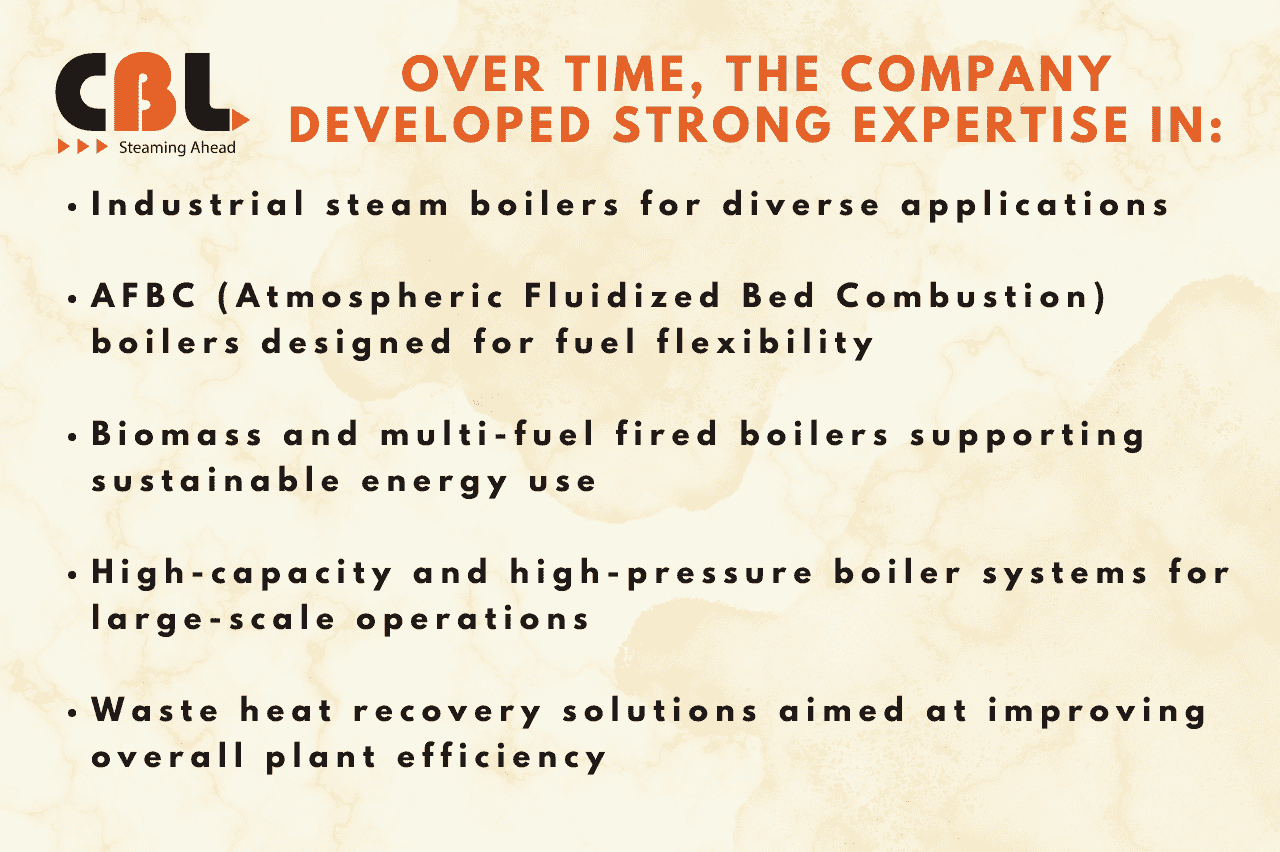
Industrial steam boilers for diverse applications
AFBC (Atmospheric Fluidized Bed Combustion) boilers designed for fuel flexibility
Biomass and multi-fuel fired boilers supporting sustainable energy use
High-capacity and high-pressure boiler systems for large-scale operations
Waste heat recovery solutions aimed at improving overall plant efficiency
This expanding technical portfolio enabled Cheema Boilers to serve industries where boiler performance directly impacts productivity, safety, and operating costs.
Expansion Across India’s Industrial Landscape
As India’s industrial base expanded, Cheema Boilers gradually extended its footprint across the country. From its headquarters in Mohali, the company began supplying boiler systems to customers in western, southern, and eastern regions of India.
Industries such as textiles and garments, sugar and distilleries, paper and pulp, food and beverages, chemicals, and various process plants increasingly relied on Cheema Boilers for consistent steam generation and reliable thermal performance.
This expansion was driven not by aggressive scaling but by reputation and repeat business. Customers who experienced dependable performance and responsive support often returned for additional systems or recommended Cheema Boilers within their industry networks.
Equally important was the company’s emphasis on after-sales support. Cheema Boilers recognized that boiler performance does not end at delivery. Installation, commissioning, and ongoing operational support are critical to long-term success, particularly in industries where downtime can result in significant financial losses.
Strong Project Execution and Service Orientation
Project execution is a critical success factor in boiler installations. Cheema Boilers developed structured project management practices to ensure smooth coordination between design, manufacturing, logistics, and on-site activities.
Dedicated project teams oversee timelines, quality checkpoints, and technical compliance throughout the execution cycle. This disciplined approach minimizes delays, reduces installation risks, and ensures timely commissioning.
During commissioning, Cheema Boilers provides hands-on technical support to ensure that boilers operate at optimal parameters. Operators are trained on safe operation, routine checks, and efficient usage. This knowledge transfer enables plant teams to manage systems confidently and reduces the likelihood of operational issues.
Manufacturing Strength and Infrastructure Development
Sustained growth required robust manufacturing capabilities, and Cheema Boilers invested steadily in developing its production infrastructure. Manufacturing facilities near Mohali were equipped to support precision fabrication, high-quality welding, and rigorous testing.
Key manufacturing strengths include controlled fabrication processes, qualified welding procedures, non-destructive testing, and structured inspection protocols. These capabilities allow the company to deliver boilers that meet stringent quality and safety standards.
Cheema Boilers follows an integrated execution model, covering design, manufacturing, installation, and commissioning. This end-to-end approach improves coordination, ensures accountability, and enables the company to manage complex projects effectively while maintaining flexibility.
The Role of Skilled Human Resources
Behind Cheema Boilers’ engineering success is a strong focus on human capital. The company believes that skilled professionals are essential to delivering consistent quality and innovation.
Engineers, technicians, and supervisors undergo continuous training to stay aligned with best practices in design, fabrication, safety, and quality control. Emphasis is placed on safety awareness, technical competence, and process discipline.
By nurturing talent and encouraging accountability, Cheema Boilers has built a workforce capable of executing technically demanding projects while maintaining high standards of reliability.
Commitment to Quality and Regulatory Compliance
In the boiler manufacturing industry, safety and compliance are non-negotiable. Cheema Boilers has consistently aligned its operations with Indian Boiler Regulations (IBR) and relevant quality standards.
Quality control is integrated at every stage—from raw material inspection and fabrication to testing and final dispatch. Documented procedures, inspection checklists, and verification processes ensure that each boiler meets defined performance and safety criteria.
Beyond compliance, Cheema Boilers has cultivated a quality-first culture across the organization. Quality is viewed not as a checklist requirement but as a shared responsibility, reinforcing customer confidence and long-term reliability.
Entering and Strengthening Global Markets
As Indian engineering products gained global acceptance, Cheema Boilers expanded its presence in international markets. Export projects required adaptation to different regulatory frameworks, fuel characteristics, and operating environments.
This exposure enhanced the company’s engineering maturity. Designing for diverse conditions strengthened product robustness and broadened technical expertise. International experience also reinforced the competitiveness of Indian boiler manufacturing on a global stage.
Cheema Boilers’ successful export journey positioned the company as a reliable international supplier while strengthening its domestic credibility.
Adapting to Sustainability and Energy Transition
The global push toward sustainability has transformed industrial energy systems. Cheema Boilers proactively aligned its product development with evolving environmental and efficiency expectations.
The company focused on biomass-based systems, multi-fuel combustion technologies, waste heat recovery solutions, and designs that reduce emissions and fuel consumption. These initiatives help industries lower operating costs while meeting environmental compliance requirements.
By supporting cleaner energy alternatives, Cheema Boilers contributes to responsible industrial growth and positions itself as a forward-looking engineering partner.
Customer-Centric and Lifecycle-Oriented Approach
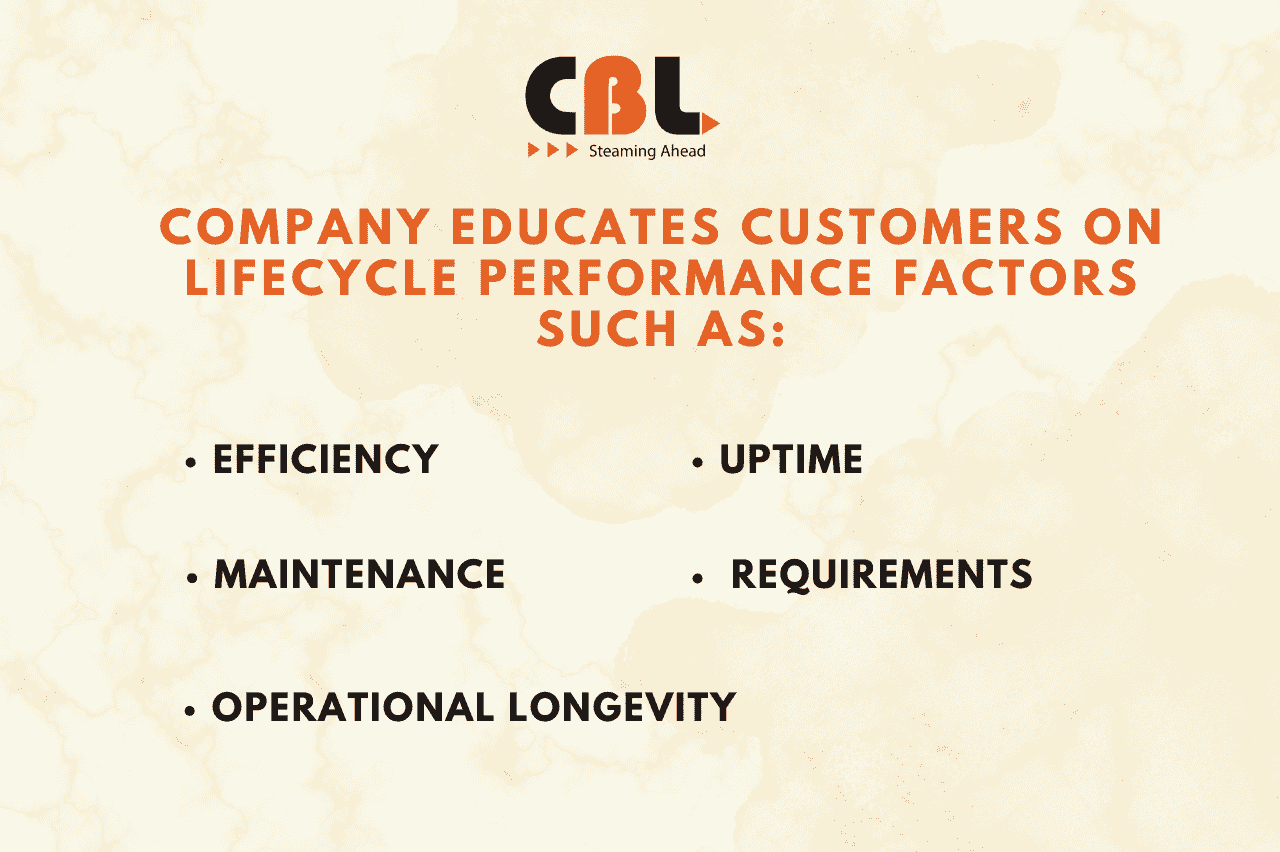
Cheema Boilers emphasizes long-term value over short-term cost considerations. Rather than focusing solely on initial equipment pricing, the company educates customers on lifecycle performance factors such as efficiency, maintenance requirements, uptime, and operational longevity.
Industry Reputation and Trust Built Over Time
Much of Cheema Boilers’ growth has been driven by repeat customers and referrals. This trust-based reputation reflects consistent performance, transparent communication, and responsible support.
Customers value the company’s willingness to stand behind its products and address challenges proactively. This reputation has become one of Cheema Boilers’ strongest intangible assets.
Looking Ahead: From Mohali to the World
As industries continue to modernize and demand efficient thermal systems, Cheema Boilers is well-positioned for the future. Rooted in Mohali, Punjab, and guided by strong engineering values, the company continues to evolve in response to changing industrial needs.
By combining traditional engineering discipline with modern technology and sustainability goals, Cheema Boilers Limited represents the strength of Indian manufacturing. Its journey—from serving regional industries to supporting global operations—demonstrates how focused expertise, disciplined growth, and customer trust can build a lasting industrial legacy.